
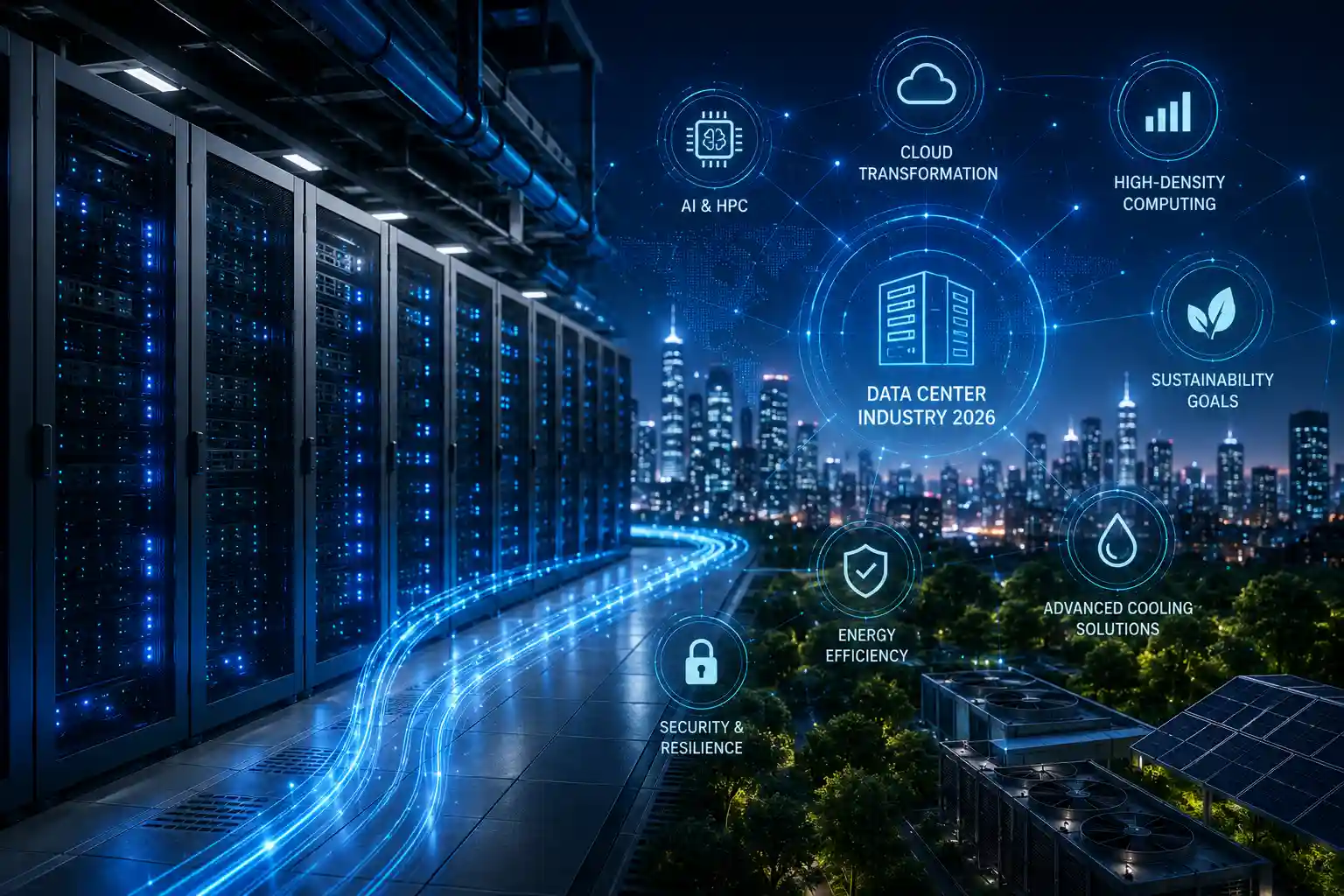
The data center industry is entering a new era of transformation driven by artificial intelligence, cloud computing, sustainability initiatives, and evolving infrastructure requirements. As organizations worldwide continue to invest in digital transformation and AI-powered technologies, data centers are facing unprecedented demands for computing power, energy efficiency, and operational scalability.
In 2026, several key trends are expected to reshape how data centers are designed, built, and operated. From liquid cooling adoption to AI-driven infrastructure management, these developments are creating new opportunities and challenges across the industry.
1. AI Workloads Continue to Drive Infrastructure Growth
Artificial intelligence remains the most significant force influencing data center development.
The rapid adoption of generative AI, large language models (LLMs), machine learning, and advanced analytics is dramatically increasing demand for computing resources. Organizations are deploying larger GPU clusters and higher-density server architectures to support increasingly complex AI workloads.
As a result, data center operators are expanding capacity while redesigning facilities to accommodate higher power consumption, greater thermal loads, and accelerated deployment schedules.
AI is no longer simply another workload category—it is becoming the primary driver of next-generation data center infrastructure.
2. Liquid Cooling Moves into the Mainstream
As rack power densities continue to rise, traditional air-cooling systems are approaching their practical limits.
In 2026, liquid cooling is expected to transition from a specialized solution to a mainstream cooling strategy for many data centers. Direct-to-chip cooling, cold plate technologies, and advanced Coolant Distribution Units (CDUs) are increasingly being deployed to manage the thermal demands of modern AI servers.
Many industry experts believe liquid cooling will become a standard requirement for future high-density computing environments, enabling greater energy efficiency, improved thermal performance, and higher rack utilization.
3. Higher Rack Densities Become the New Standard
Historically, enterprise data centers operated with relatively moderate rack power levels. However, AI infrastructure is fundamentally changing this model.
Modern GPU servers require significantly more power than traditional CPU-based systems, leading to substantial increases in rack density. Facilities are being designed to support much higher power capacities while maintaining reliability and cooling efficiency.
This trend is encouraging data center operators to rethink power distribution, cooling architectures, floor layouts, and infrastructure planning strategies.
4. Sustainability Remains a Strategic Priority
Environmental responsibility continues to play a major role in data center investment decisions.
Organizations are under increasing pressure to reduce energy consumption, lower carbon emissions, and improve overall operational efficiency. Governments, regulators, and investors are also placing greater emphasis on sustainability reporting and environmental performance.
As a result, operators are investing in:
- Energy-efficient cooling technologies
- Renewable energy integration
- Heat recovery systems
- Water conservation initiatives
- Carbon reduction programs
Sustainability is becoming a core business objective rather than a secondary consideration.
5. Data Center Energy Demand Continues to Rise
The growth of AI infrastructure is driving significant increases in electricity consumption.
As computing workloads expand, power availability is becoming one of the most important factors influencing data center development. In some regions, access to reliable electrical infrastructure is emerging as a critical constraint on future growth.
Operators are increasingly focusing on energy optimization strategies, power management technologies, and infrastructure planning to ensure long-term scalability.
Power has become a strategic resource for the AI era.
6. Intelligent Infrastructure Management Gains Momentum
Data centers are becoming more complex, making real-time monitoring and automation increasingly important.
Artificial intelligence and machine learning are now being applied to infrastructure operations, helping operators improve efficiency and reduce operational risks.
Advanced monitoring systems can analyze data from thousands of sensors and provide insights into:
- Cooling performance
- Power utilization
- Equipment health
- Capacity planning
- Predictive maintenance
These technologies enable more proactive management and help optimize overall facility performance.
7. Edge Data Centers Continue to Expand
While hyperscale facilities remain a major focus, edge computing is also driving infrastructure growth.
As applications require lower latency and faster response times, organizations are deploying computing resources closer to end users. Edge data centers support emerging technologies such as:
- Autonomous vehicles
- Industrial automation
- Smart cities
- Internet of Things (IoT)
- Real-time analytics
The continued expansion of edge infrastructure is creating new opportunities for modular, scalable, and energy-efficient data center solutions.
8. Modular and Scalable Design Becomes Essential
The pace of technological change is accelerating, making flexibility more important than ever.
Data center operators increasingly prefer modular infrastructure that can be expanded or upgraded as requirements evolve. Modular designs enable faster deployment, improved scalability, and reduced construction risks.
This approach allows organizations to adapt quickly to changing workload demands while maintaining operational efficiency.
The Road Ahead
The data center industry in 2026 will be defined by higher computing densities, increasing energy requirements, widespread liquid cooling adoption, and growing emphasis on sustainability.
AI will continue to influence nearly every aspect of infrastructure planning, from power distribution and thermal management to automation and facility design. Organizations that embrace innovative cooling technologies, intelligent operations, and scalable infrastructure strategies will be best positioned to succeed in the next phase of digital transformation.
Conclusion
The future of the data center industry is being shaped by powerful forces including AI adoption, liquid cooling innovation, sustainability initiatives, and infrastructure modernization. As demand for computing resources continues to grow, operators must balance performance, efficiency, reliability, and environmental responsibility.
In 2026 and beyond, successful data centers will be those that can efficiently support increasingly demanding workloads while maintaining the flexibility required to adapt to a rapidly evolving technology landscape.