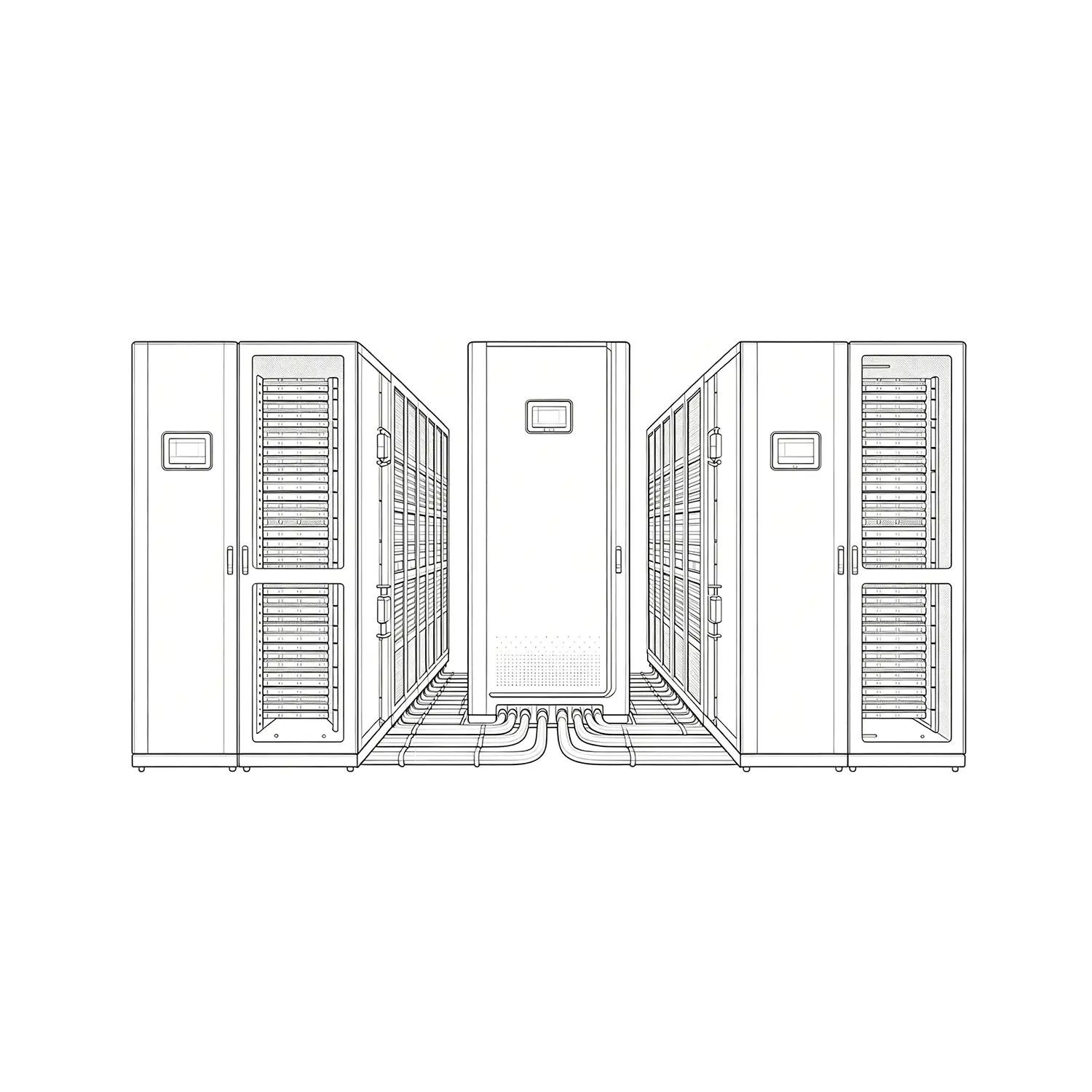
Featuring a wedge-shaped distributed jet cold plate design, this solution effectively addresses uneven flow distribution across multiple flow channels under varying operating conditions.
Leveraging our extensive two-phase flow research database, we provide precise design calculations and optimization support for rack-level pump-driven cooling systems.
APALTEK’s Pump-driven Two-phase Cooling System is designed for high heat flux thermal management applications requiring exceptional cooling performance and flow stability. By combining advanced two-phase flow technology with wedge-shaped distributed jet cooling plates, the system effectively addresses uneven flow distribution challenges under multi-branch and variable operating conditions.
Backed by APALTEK’s extensive two-phase flow research database and engineering expertise, the system enables accurate thermal calculations and customized cooling designs to meet the requirements of next-generation computing, power electronics, and advanced industrial applications.
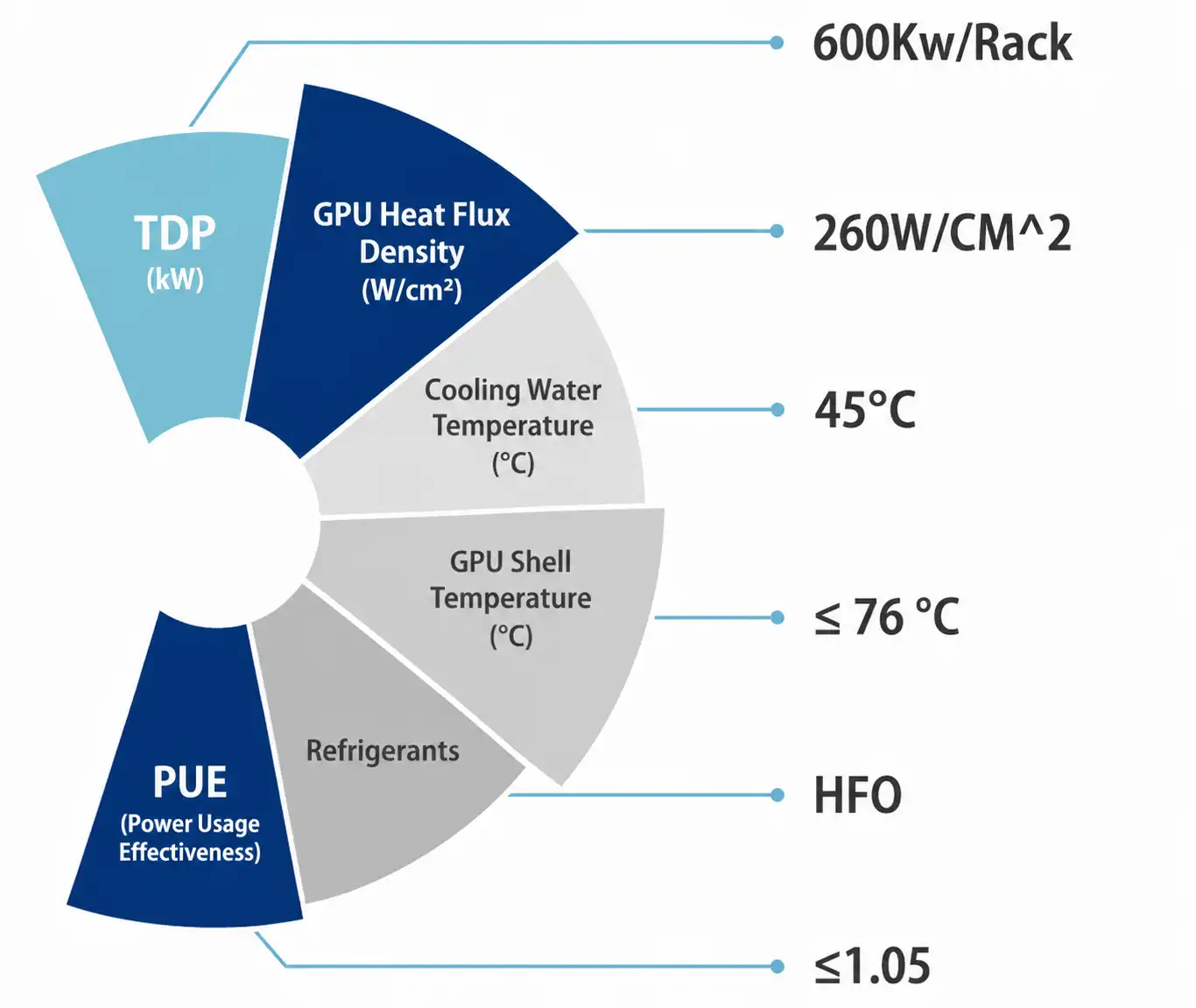
Leveraging highly efficient phase-change latent heat transfer, the system delivers superior thermal performance compared with conventional single-phase cooling solutions. It is designed to support the extreme heat flux generated by AI GPUs, ASICs, and other high-power computing devices, overcoming the limitations of air cooling and single-phase liquid cooling for next-generation AI workloads.
The system provides reliable near-isothermal heat transfer with highly uniform chip temperature distribution and minimal temperature gradients. By mitigating thermal throttling under sustained high workloads, it helps maintain stable, continuous full-power computing performance.
The dielectric working fluid significantly reduces the risks of electrical leakage and short circuits. In the event of minor leakage, the fluid evaporates rapidly with minimal residue, helping protect electronic components from corrosion and damage while improving overall system safety.
The closed-loop working fluid environment inhibits microbial growth and significantly reduces the risks of fouling, contamination, and pipeline blockage. Its high tolerance to internal impurities minimizes maintenance requirements commonly associated with water-cooling systems, lowering both maintenance frequency and failure risks.
Phase-change cooling operates with low circulating flow rates, significantly reducing pump and fan power consumption. It supports wide-temperature-range operation and warm-water cooling, extending free-cooling utilization time and providing greater potential for PUE optimization while reducing acoustic noise and airflow dependency in high-density computing environments.
Featuring low flow rates and low pressure-drop characteristics, the system minimizes hydraulic losses commonly encountered in large-scale single-phase cooling deployments. Its flexible rack-level architecture supports scalable AI data center cluster deployment and seamless capacity expansion.
Minimal temperature fluctuations significantly reduce thermal cycling stress on precision electronic components, mitigating aging and fatigue-related degradation. This improves long-term operational stability and extends the service life of mission-critical computing hardware.
The streamlined system architecture helps optimize both capital and operational expenditures. By reducing hidden maintenance costs associated with pipeline corrosion, frequent servicing, and working fluid replacement, it delivers superior lifecycle energy efficiency and competitive total cost of ownership (TCO) performance.
By overcoming the power-density limitations of traditional cooling technologies, the system enables ultra-high IT load deployment per rack and significantly increases computing capacity per unit area. It maximizes white-space utilization and enhances the economic value of data center infrastructure.
The thermal architecture provides ample thermal design margin to support future high-TDP GPUs, ASICs, and emerging AI accelerators. Designed with long-term scalability in mind, it offers thermal headroom for two to three generations of computing platforms, ensuring sustained compatibility and future-proof deployment.
Tell us your application requirements and project details. Our team will provide product recommendations and a customized solution based on your needs.
Complete the form below and our team will provide a customized quotation based on your project requirements. We’ll get back to you within 1 business day.