
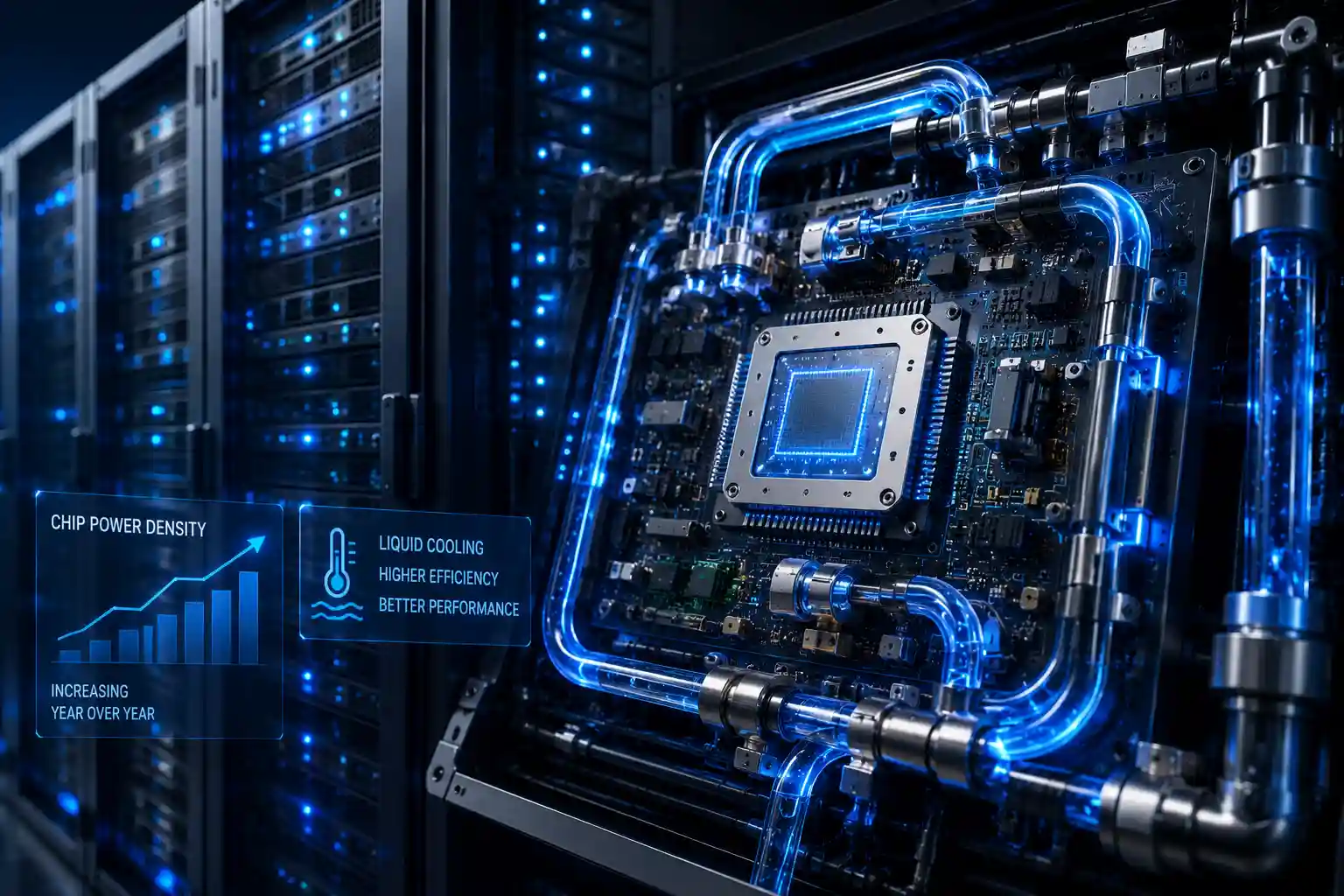
Artificial intelligence is driving one of the largest infrastructure transformations in computing history. As organizations deploy increasingly powerful AI models, the hardware supporting these workloads is evolving rapidly. Modern AI servers are equipped with high-performance GPUs and accelerators that deliver extraordinary computing power—but they also generate unprecedented amounts of heat.
For many years, traditional air cooling was sufficient for most server environments. However, the rise of AI has fundamentally changed thermal management requirements. Today, liquid cooling is no longer viewed as an optional enhancement for high-performance systems. It is increasingly becoming a necessity for supporting the next generation of AI infrastructure. Industry experts now describe liquid cooling as a key enabler of AI-ready data centers and high-density GPU deployments.
The Growing Power of AI Hardware
The demand for AI computing continues to accelerate as organizations train larger models, process massive datasets, and deploy increasingly sophisticated machine learning applications.
To support these workloads, GPU manufacturers are delivering processors with dramatically higher performance levels and significantly increased power consumption. Many modern AI accelerators consume hundreds of watts per device, while next-generation GPUs are expected to exceed previous power thresholds by a considerable margin. As GPU power rises, heat generation increases proportionally, creating new challenges for thermal management systems.
The result is a rapid increase in rack power density. AI racks that once operated comfortably within the limits of traditional cooling systems are now reaching levels that strain conventional air-cooling infrastructure.
Why Air Cooling Is Reaching Its Limits
Air cooling removes heat by moving large volumes of air across electronic components. While effective for lower-density workloads, this approach becomes increasingly difficult as power density rises.
As AI servers consume more power, larger heat sinks, higher fan speeds, and more complex airflow management strategies are required. Eventually, practical and physical limitations begin to emerge:
- Reduced cooling efficiency at high power densities
- Increased fan power consumption
- Higher operating costs
- Difficulty controlling hotspots
- Limited scalability for future workloads
Many AI deployments now exceed the cooling capabilities that traditional air-cooling systems were originally designed to support. As a result, operators are actively seeking alternative cooling strategies capable of handling higher thermal loads.
Liquid Cooling Removes Heat More Efficiently
Liquid cooling addresses these challenges by using coolant to absorb and transport heat directly from high-power components.
Because liquids transfer heat far more effectively than air, liquid cooling systems can remove substantially larger thermal loads while maintaining stable operating temperatures. Direct-to-chip cooling solutions, for example, use cold plates mounted directly onto CPUs and GPUs to capture heat at the source. This approach can remove the majority of server heat before it enters the surrounding environment.
By reducing thermal resistance and improving heat transfer efficiency, liquid cooling enables AI hardware to operate more consistently under demanding workloads.
Supporting Higher Rack Densities
One of the primary reasons liquid cooling is becoming essential is its ability to support higher rack densities.
AI data centers are increasingly deploying large GPU clusters that require far more power than traditional enterprise servers. Liquid cooling allows operators to install more computing capacity within the same footprint while maintaining acceptable thermal conditions.
This capability is becoming particularly important as organizations seek to maximize infrastructure utilization and reduce data center expansion costs. Liquid cooling has become a key technology for enabling next-generation high-density AI environments.
Improved Energy Efficiency
Cooling infrastructure represents a significant portion of total data center energy consumption.
Traditional air-cooling systems require large fans, air handlers, and HVAC equipment that consume substantial amounts of electricity. Liquid cooling reduces reliance on airflow and can improve overall cooling efficiency by removing heat more directly and effectively.
For many operators, the transition to liquid cooling is driven not only by thermal requirements but also by the need to improve energy efficiency and reduce operating costs. Liquid-cooled facilities are increasingly viewed as a practical solution for supporting sustainable AI growth.
Better Performance and Reliability
Temperature has a direct impact on processor performance.
When components become too hot, systems may reduce operating frequencies through thermal throttling to protect hardware. This can negatively affect AI training times, inference performance, and overall productivity.
Liquid cooling helps maintain lower and more stable operating temperatures, reducing the likelihood of thermal throttling and improving long-term hardware reliability. Recent benchmarking studies have demonstrated measurable performance advantages for liquid-cooled GPU systems compared to air-cooled alternatives under heavy AI workloads.
Preparing for the Future of AI
The future of AI infrastructure points toward even higher power densities and greater thermal challenges.
Industry leaders are already designing data centers around liquid cooling architectures, and many next-generation AI platforms are being optimized specifically for liquid-cooled environments. Advanced cooling technologies such as direct-to-chip cooling, intelligent CDU systems, and immersion cooling are expected to become increasingly common as AI computing continues to scale.
Organizations that adopt liquid cooling today are positioning themselves to support future AI workloads more effectively while improving efficiency, scalability, and operational resilience.
Conclusion
Liquid cooling is becoming essential for AI servers because it addresses the growing thermal challenges created by modern GPUs and AI accelerators. As processor power increases and rack densities continue to rise, traditional air-cooling systems are approaching their practical limits.
By delivering superior heat removal, improved energy efficiency, higher rack density support, and better system reliability, liquid cooling has become a foundational technology for the future of AI infrastructure. As AI adoption accelerates worldwide, liquid cooling will play a critical role in enabling the next generation of high-performance computing environments.